Fly Control: Reducing Pinkeye Transmission
Published on: 5/15/2025Key Takeaways
- Pinkeye risk rises in late spring and summer as warm conditions favor Moraxella bovis and increased face fly activity.
- Face flies are a key driver of transmission, spreading infection by feeding on eye and nose secretions and carrying bacteria for up to three days.
- Effective pinkeye prevention depends on strong fly control, tailored to how often cattle can be handled and pasture accessibility.
- Common fly-control tools include fly tags (up to five months of control), insecticide-charged cattle rubs or dust bags, mineral feeders with built-in insecticide, and pour-on or spray treatments when frequent application is possible.
- A combined fly-control strategy provides the greatest protection, helping reduce pinkeye spread and support herd health throughout fly season.
A Word From the Vets...
As spring turns to summer, conditions become ideal for the development and transmission of Moraxella bovis, the primary infectious agent of pinkeye. Because M. bovis transmission often involves face flies, an intensive fly control program is essential.
Pinkeye is spread when an animal comes into contact with infected secretions of another. Face flies feed on eye and nose secretions, carrying infectious agents with them. Flies can harbor M. bovis for up to three days, transmitting it rapidly from infected to non-infected animals.
When comparing fly control methods, consider what is the most practical to implement in your operation. If your herd interaction is infrequent due to time, distance or pasture size, your approach may differ from a producer whose cattle are nearby and easily accessible.
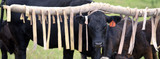
Fly tags are an economical aid in the control of face flies for up to 5 months. Cattle rubs charged with insecticide or dust bags allow cattle to self-treat frequently. The Bullmaster II Mineral Feeder with Fly Killer Kover has a built-in insecticide reservoir that continuously saturates the feeder’s felt cover, applying insecticide each time mineral is consumed. Pour-on insecticides and topical sprays can be quite effective if more frequent application is feasible. It’s often a combination of these efforts that provides the greatest benefit. As always, if you have questions about the health of your herd, we will do our best to help you find answers that make sense.
Arnold Nagely, DVM • Ray Shultz, DVM
Vigilant fly control often requires a combination of efforts.
Whether for horse, livestock, or pet, Valley Vet Supply is your one-stop shop for trusted care. Explore more of our cattle category at ValleyVet.com