
How to Help Control Lice From Sucking the Potential Out of Your Cattle
Published on: 4/29/2025Key Takeaways
- Lice negatively impacts cattle health and profitability. Infestations can cause weight loss of up to 9.2%, hair loss, increased infection risk, and facility damage, all of which affect performance and returns.
- Lice thrive and spread rapidly in cooler weather. Their life cycle accelerates in cold temperatures, and a single untreated louse in the fall can multiply into a massive infestation by winter.
- Close contact drives lice transmission. Shipping, feeding, working cattle, fence-line contact, and introducing untreated new animals are common sources of spread and re-infestation.
- Proper diagnosis is key to effective control. Visual inspection, parting the hair in common feeding areas, and counting lice per square inch help determine infestation severity and guide treatment decisions.
- Products with insect growth regulators (IGRs) offer the most complete control. IGRs target both adult lice and eggs, allowing for effective control with a single treatment rather than repeated applications.
Lice are more than just a nuisance to cattle. They cause weight loss of up to 9.2% (1), hair loss, increased chance of infection and damage to facilities that affect producers’ bottom lines. As cooler weather sets in, be prepared to help keep lice from sucking on your herd’s well-being and potential profits by understanding their life cycle, signs of infestation and treatment options.

The Lice Life Cycle
Lice have three developmental stages: egg, nymph and adult. A louse typically reaches adulthood in four to six weeks, but, in colder weather, may mature in as quickly as three weeks. Lice thrive in cooler temperatures because sunlight and heat can stop reproduction and kill existing populations.
Once lice become an issue, it’s often difficult to stop. If not controlled, a single adult female louse in the fall can result in 1 million lice by the time winter sets in.
How Lice Spread
Lice spread by contact between animals, usually when they are being shipped, fed or worked.
New animals being brought into the herd, such as replacement animals, added pen mates or strays, can cause re-infestation if they have not been treated for lice. Even nose-to-nose contact through a common fence can be sufficient to spread lice in winter months.
Steps To Determine Lice Infestation
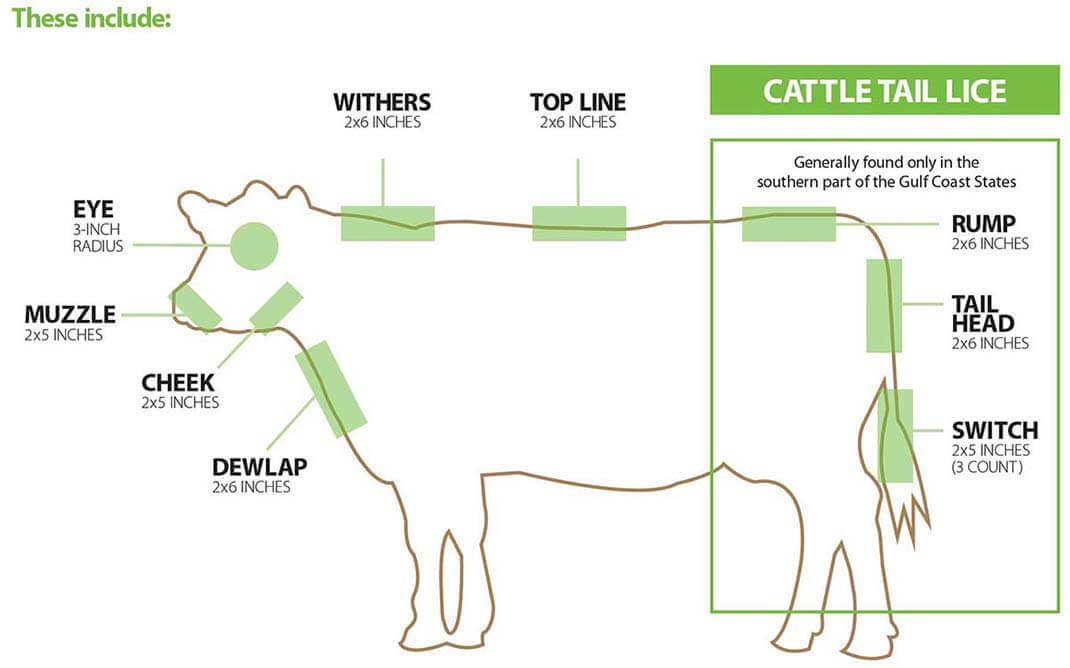
To determine whether your problem is caused by lice and the degree of infestation, follow these steps:
-
- Visually evaluate any hair loss or signs of rubbing on the animal in question.
- Obtain proper lighting and restrain the animal in a chute to allow for proper examination.
- Part the hair at several locations on the body and examine areas that are preferred feeding sites for both biting and sucking lice.
- Determine the level of infestation by counting the number of lice per square inch in at least four of the locations. Lice often congregate in a small area with as many as several hundred in one spot and just a few over the rest of the body.
The general rule of thumb for gauging infestations is:
-
- One to five lice per inch = minimal
- Five to 10 lice per inch = moderate
- 11 or more lice per inch = heavy
Choosing A Lice-Control Product
While several options control adult lice, only products with insect growth regulators (IGR) have the ability to also kill lice eggs at the same time. This means just one dose of an IGR product is necessary to provide effective control of both adults and eggs.
Clean-Up II Pour-On Insecticide with IGR from Elanco is one option cattle producers can use to control lice this winter.
References:
1Ronnie Byford, M. Craig, B. Crosby, “A Review of Ectoparasites and Their Effect on Cattle Production,” Journal of Animal Science 70 (1992).
Whether for horse, livestock, or pet, Valley Vet Supply is your one-stop shop for trusted care. Explore more of our cattle category at ValleyVet.com