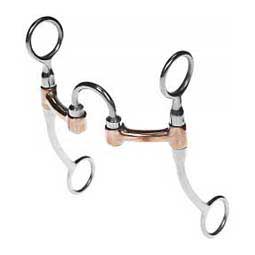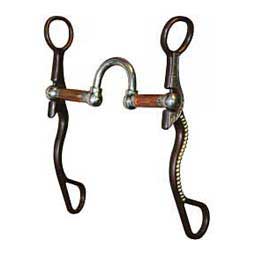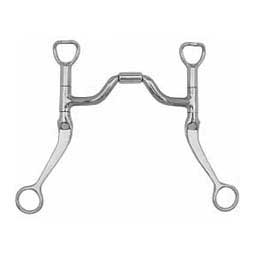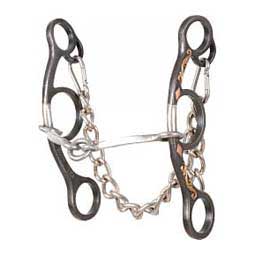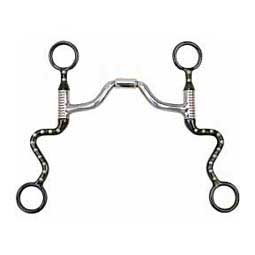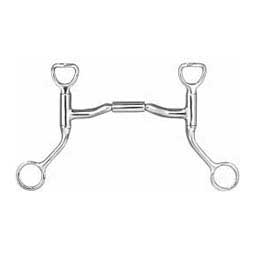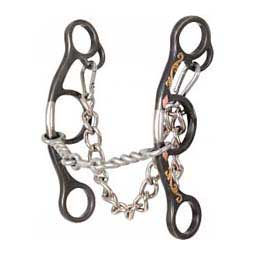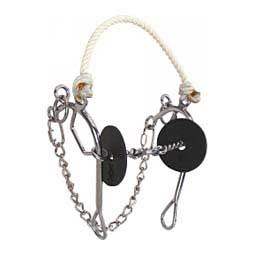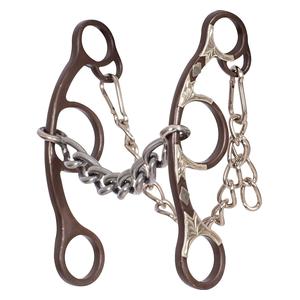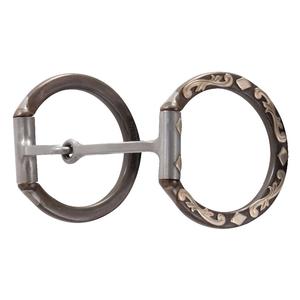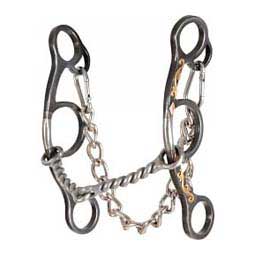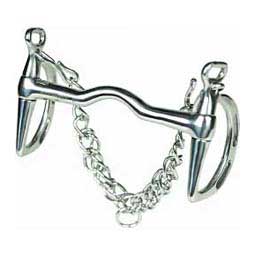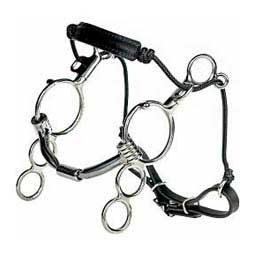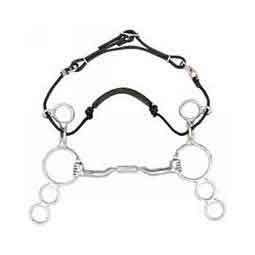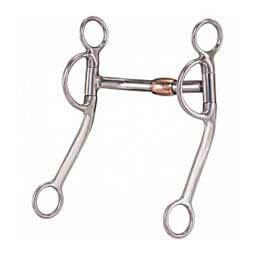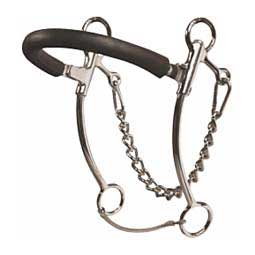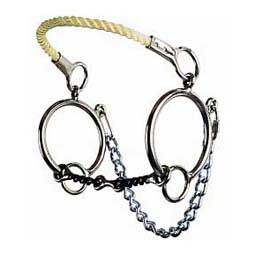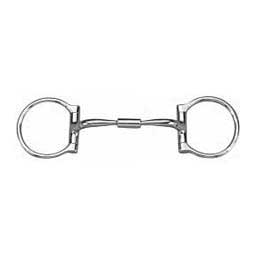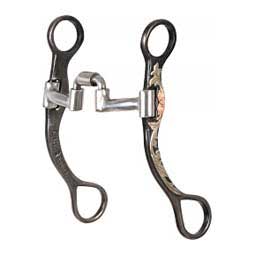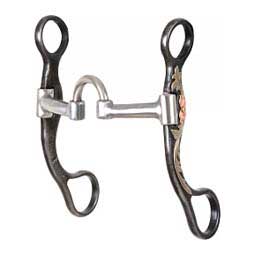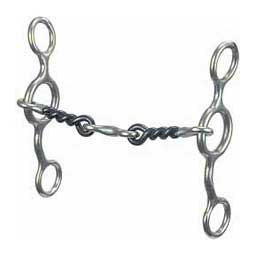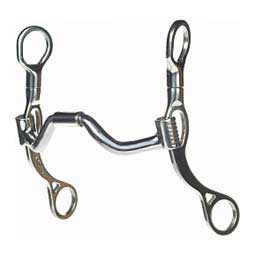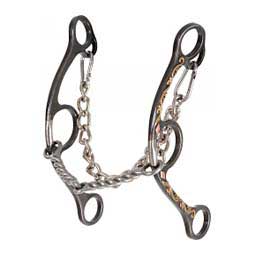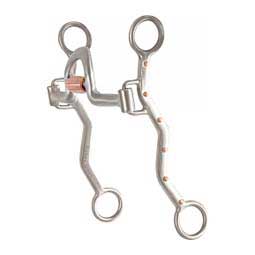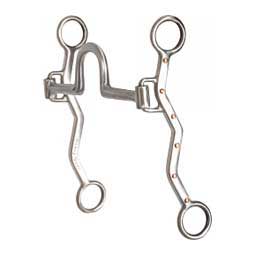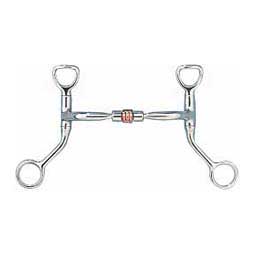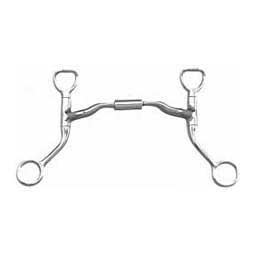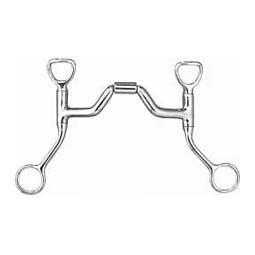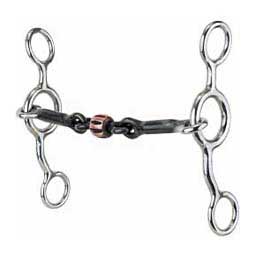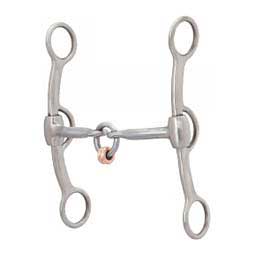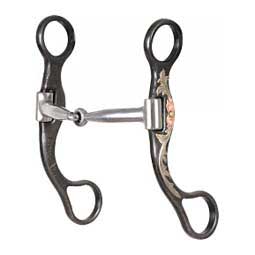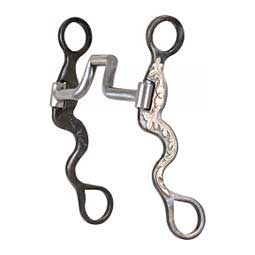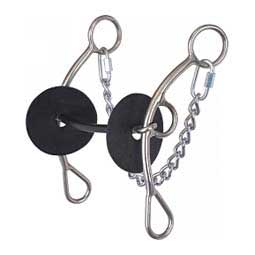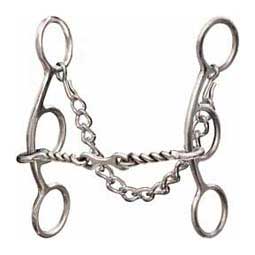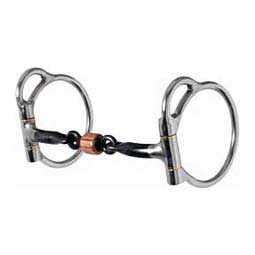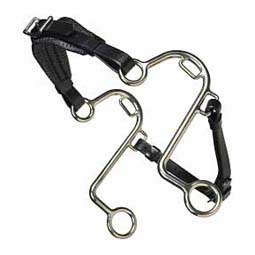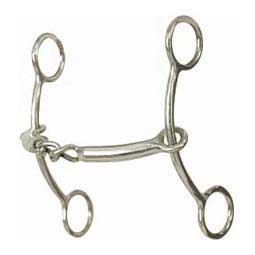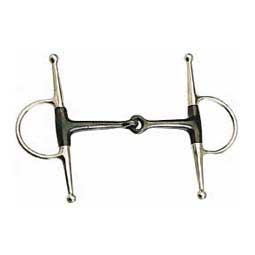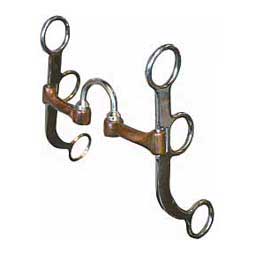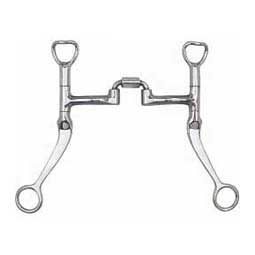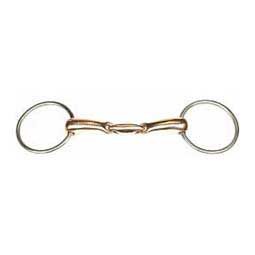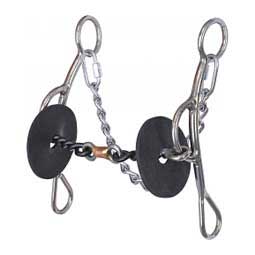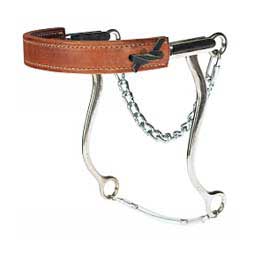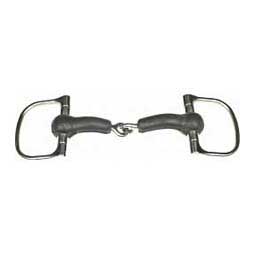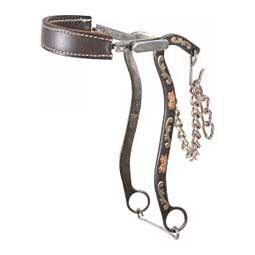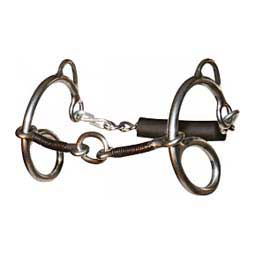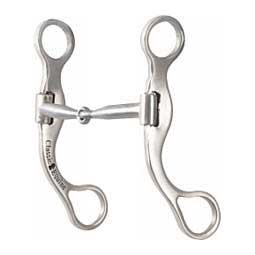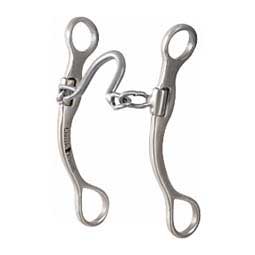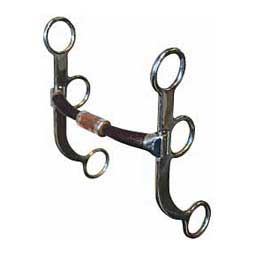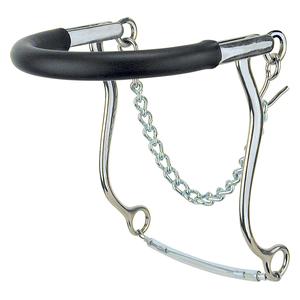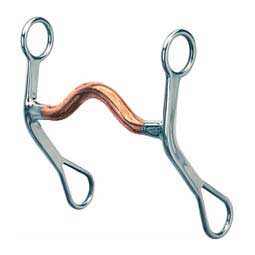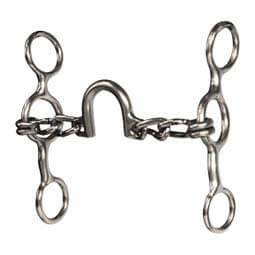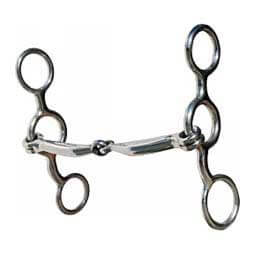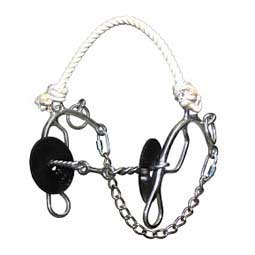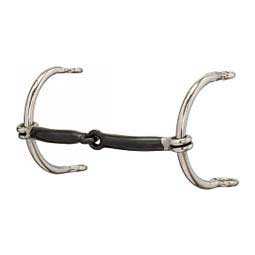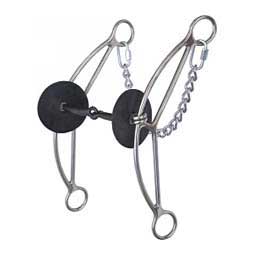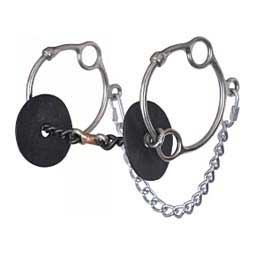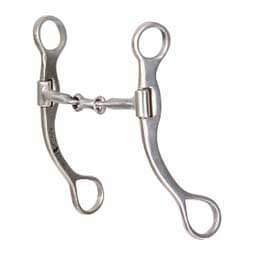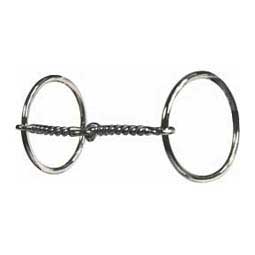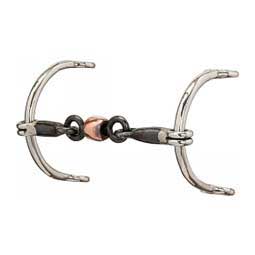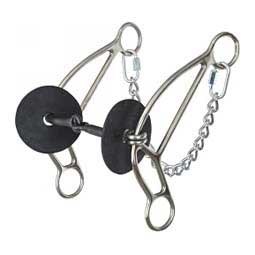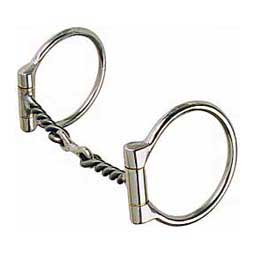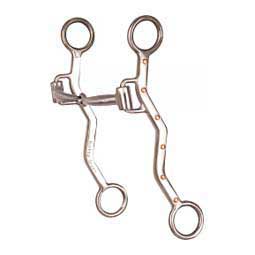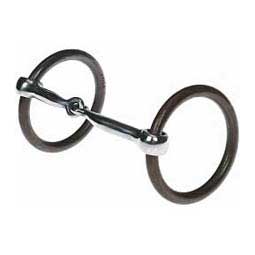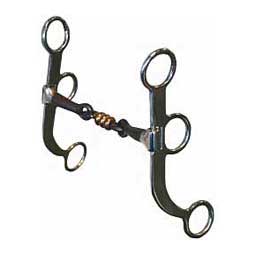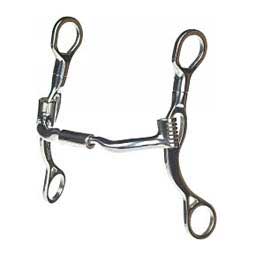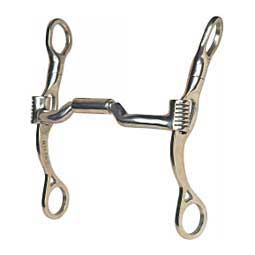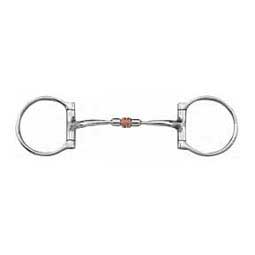
How the Combination Bit Works:
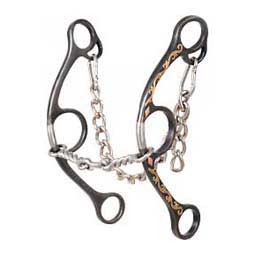
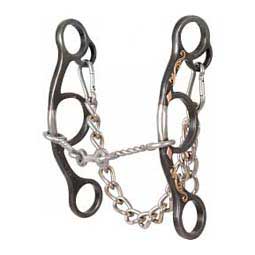
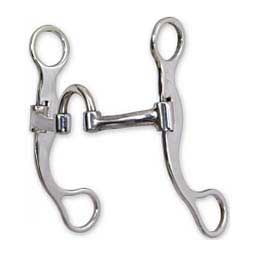
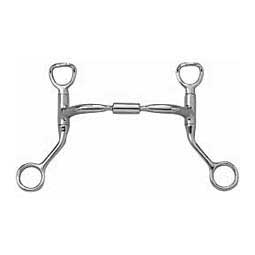
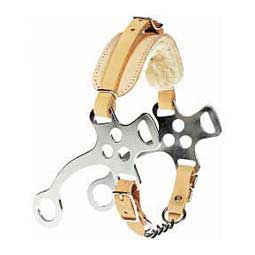
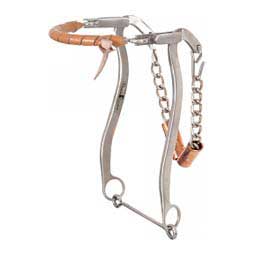
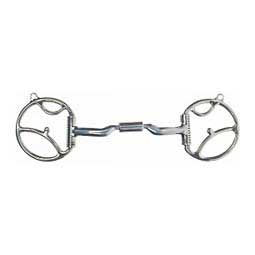
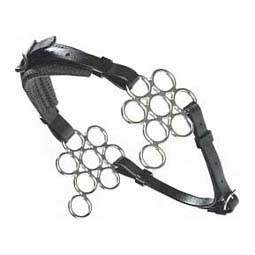
The bit operates through both direct action and leverage, with the addition of nose pressure, when desired. It is to be used with a leather curb strap or curb chain, and can be used with or without a cavesson. There are a variety of options for rein configurations. When attaching a single rein to the nose rope, and the rider applies pressure (pulls) on the reins, it sends a signal simultaneously to the nose, mouth (bars and tongue), chin and poll, instead of to just one focused area. The horse receives pressure to the nose rope and curb strap, through the cheek pieces, just ahead of the mouthpiece. The nose rope applies downward and backward pressure and the curb strap applies upward pressure. This encourages vertical flexion. The wide, mild mouthpiece immediately following rotates slightly and slowly downward and back to apply pressure over the tongue and bars. The width of the mouthpiece gives the horse an advanced signal that there is an incoming request. The bit also incorporates a copper roller, which stimulates saliva production, and keeps a nervous or “busy- mouthed” horse pacified. Also, it discourages the horse from putting the tongue over the bit. Other rein configurations are attaching a single rein to the cheek pieces upper rein slot for direct pressure, similar to that of a snaffle, or to the lower rein slot for the function of a leverage bit, or to the nose rope for divided pressure. Double reins may also be used in any combination of the three rein positions. The most popular rein configuration is attaching one rein to the nose rope (for divided pressure) and one rein to the upper or lower slot on the cheek piece.
You will be prompted with product specific questions when you click Add to Cart: