
Preparing for Foaling Season
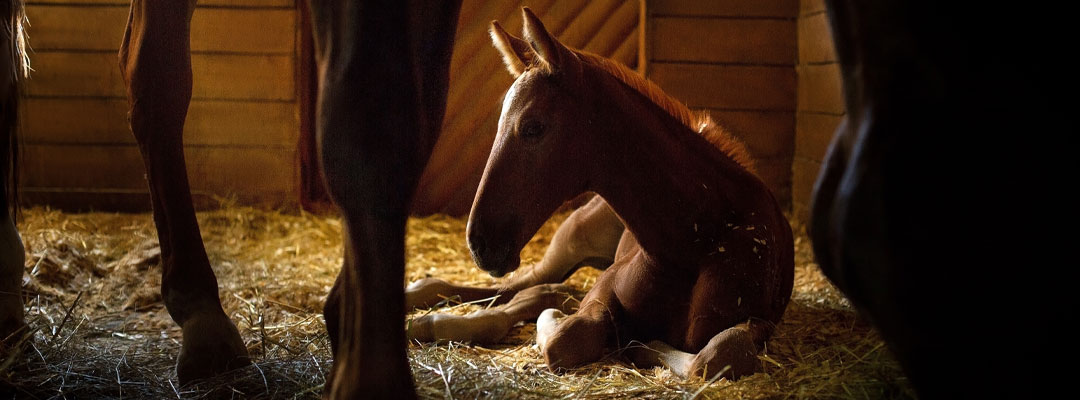
Few moments in horse ownership are as rewarding as welcoming a new foal. Preparation, observation, and timely intervention play a major role in a successful outcome. Understanding what to expect during labor and the first hours of life gives you the tools to support the mare, protect the foal, and respond quickly if something goes wrong.
The Foaling Process
Stage One
Stage one of labor can vary widely in mares. Visible signs typically last two to three hours, but some mares may progress in as little as 30 minutes, while others may remain in this stage for 10 hours or more. Older mares may show few outward signs, while maiden mares often display more obvious behavior.
Common signs include:
Stage one ends when the "water breaks", which occurs as the choriallantoic membrane ruptures and releases allantoic fluid.
Stage Two
Stage two begins when the water breaks and continues until the foal is delivered. The normal presentation is front feet first, soles facing down, with one foot slightly ahead of the other and the muzzle resting on top. You will usually see the amnion first. It appears white and resembles a water-filled balloon.
This stage usually lasts 10 to 15 minutes and progresses quickly. The mare may get up and lie down several times, so monitor her closely. Once the mare is lying on her side, strong contractions will push the foal out.
After delivery, immediately remove the amnion from around the foal's face so it can breathe. Do not cut the umbilical cord, it will break naturally when the mare stands.
You may notice that the foal has "golden slippers" at birth. This is the eponychium, a soft, rubbery covering over the hooves that protect the mare during birth.
Stage Three
During stage three, the mare expels the placenta. This typically occurs within 30 minutes to three hours after foaling. If the placenta does not pass by three hours, veterinarians consider it a retained placenta.
A veterinarian may recommend small doses of oxytocin (1 to 2 cc, or 10-20 IU) to encourage passage. Always examine the placenta to ensure it is complete and intact.
Retained placentas in horses are a medical emergency. Contact your veterinarian immediately, as retained fetal membranes can lead to infection and laminitis.
Early Newborn Care and Monitoring
The First 30 Minutes
Within the first 30 minutes, dip the foal?s navel in either a chlorhexidine solution (1 part chlorhexidine to 4 parts water) or iodine. Repeat dipping two or more times to help prevent infection.
Check the mare for excessive discharge or bleeding. If the placenta has not fully passed, tie it in a loose knot to prevent the mare from stepping on it and tearing it.
Allow the mare and foal quiet time to bond.
First Two Hours
Foals should reach the following milestones:
If the mare's colostrum quality is high (>800 mg/dL or >23% Brix) and extra is available, freeze some for future use.
Products to Measure Colostrum Quality
Normal Foal Vitals
First 24 Hours
Check the foal's IgG levels around 12 hours after birth using a CITE or SNAP test. If levels are low, administer plasma (1-2 liters IV) or consider a product such as Seramune. During this time, evaluate the foal's legs, monitor vital signs, and observe behavior closely. The foal should nurse approximately 50-60 times per day during the first week, with many short naps in between.
Most Common Foal Problems
Meconium Impaction
Failure of Passive Transport (FPT) (<400 mg/dL IgG in plasma)
Neonatal Sepsis
Neonatal Maladjustment Syndrome (Dummy Foal Syndrome)
Leg Evaluation
Contracted or Loose Tendons
The exact cause is unknown. Severe cases may contribute to dystocia and impaired mobility
Angular Limb Deformities (e.g. knock-kneed)
Management depends on severity and age of the foal
Fetlock: up to ~10 weeks
Hock: up to ~12 weeks
Knee (carpus): up to ~16 weeks
Post-operative confinement and rest for 6-8 weeks
Equine Dystocia
Dystocia is more common in thoroughbreds, Shetland ponies, and draft horses, and is mainly because of fetal causes. Timing is critical when knowing when you have a problem.
Warning Signs
If you are presented with a "red bag" foal, cut open the placenta immediately, deliver the foal, and call your veterinarian.
If the mare is not making any progress, check the presentation, if the foal is in the correct position, help pull. If the foal is not in the correct position, call your veterinarian as soon as possible and try to get the mare up and walking. The foal must be readjusted manually and difficulty depends on position, and if the foal isn't breathing give mouth to nostril every 2-3 seconds. Continue until spontaneous breathing occurs or veterinary help arrives.
Options for Malpresentation
Following dystocia, additional risks include:
Post-Foaling Complications
Post-foaling complications can affect both the mare and the foal, especially after a difficult birth (dystocia). One of the most serious concerns is periparturient hemorrhage (PPH), which involves severe internal bleeding caused by lacerations or rupture of the uterine artery. PPH occurs in about 3% of mares, typically within 48 hours after foaling, and mares older than 15-18 years are at a higher risk. Watch closely for signs such as colic-like pain or symptoms of hypovolemic shock. Both the mare and foal should be monitored closely in the hours and days after foaling.
Orphans
If a foal becomes orphaned, the first priority is ensuring it receives quality colostrum. If possible, place the foal with a nurse mare. When a nurse mare is not available, bottle-feed a milk replacer. This approach is labor intensive, as foals require 8-12 feedings per day for the first 2-3 weeks.
After this period, gradually transition the foal to bucket feeding. Begin introducing solid feed at 3-4 weeks of age, wean off milk replacer by 3 months, and ensure clean, fresh water is always available.
First Few Months of the Foal's Life
Feed and Water Introduction
Foals can begin accessing water by 2-3 weeks of age and will start nibbling hay and grain by 2-4 weeks. You can begin offering creep feed at a rate of approximately 1 lb per month of age, formulated with around 16% crude protein.
Weaning
The typical weaning period occurs between 4-6 months of age.
Vaccinations
First vaccinations are commonly started at 6-9 months of age.
Deworming Program
Deworming should begin at 1-2 months of age and repeat every 3-4 months until one year of age. Use age-appropriate products and avoid moxidectin in young foals.
Suggested Rotation:
A healthy foaling outcome starts with knowledge, preparation, and good management. By understanding normal labor, recognizing early warning signs, and providing proper newborn care, you set the foundation for a strong start. Every foal is different, but informed caretakers give each one the best chance to thrive.